Magnetic Resonance Imaging (MRI)
Magnetic Resonance Imaging (MRI) is a non-invasive test that produces detailed, highly diagnostic imaging of the internal organs. Instead of ionising radiation, it uses a very powerful magnetic field and radio frequency pulse waves to record the rotating magnetic field produced by atoms in the body.
How the Test is Performed
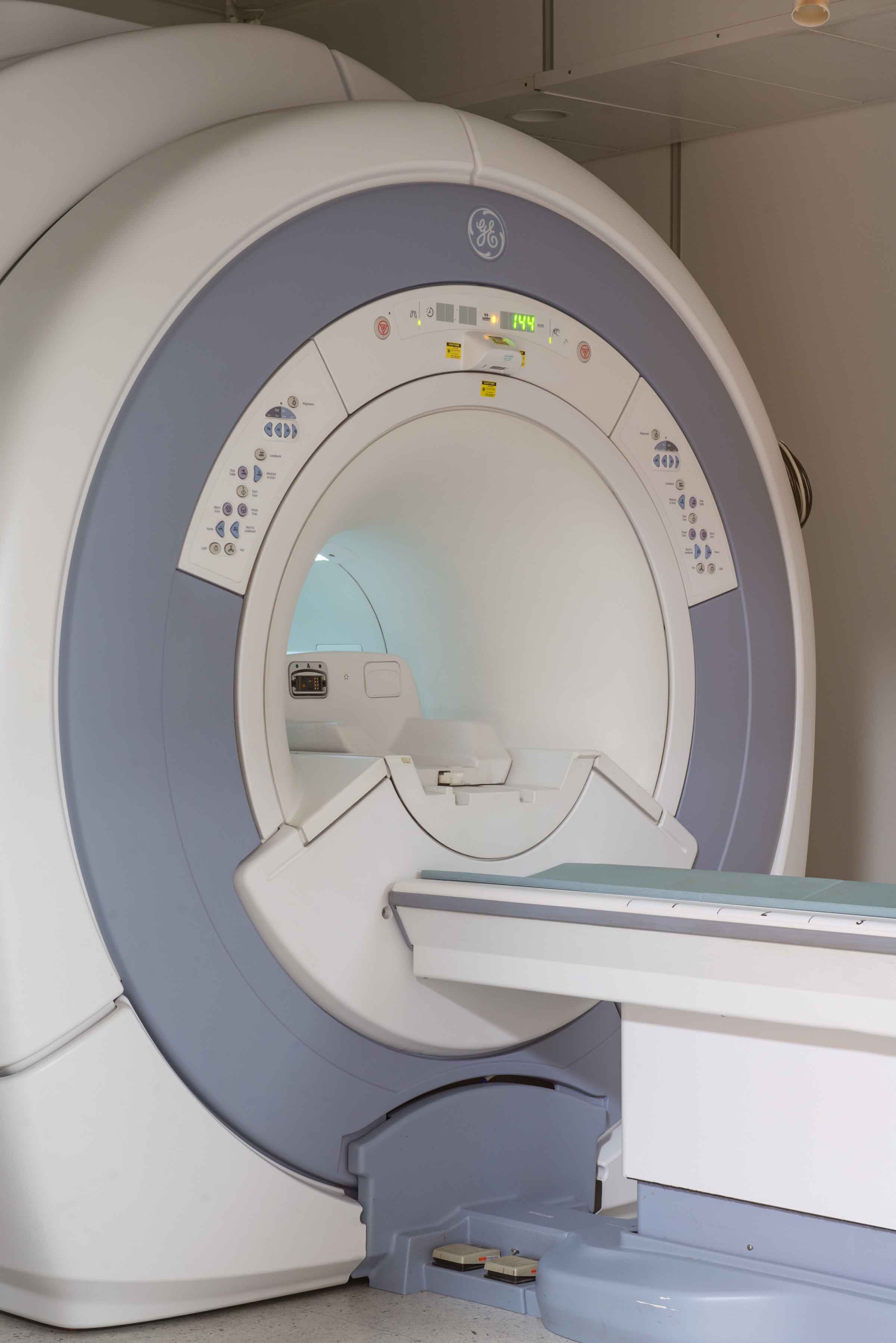
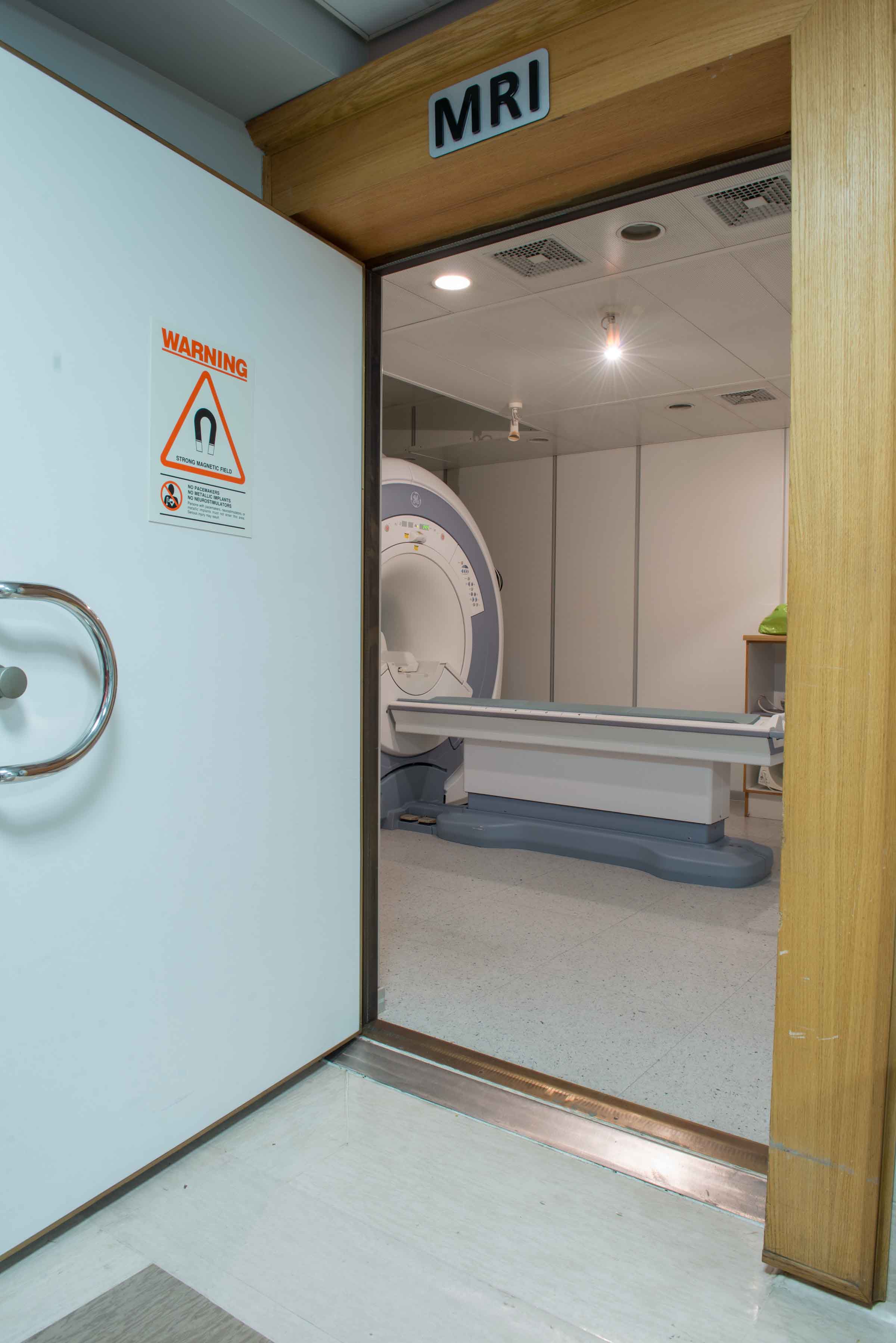
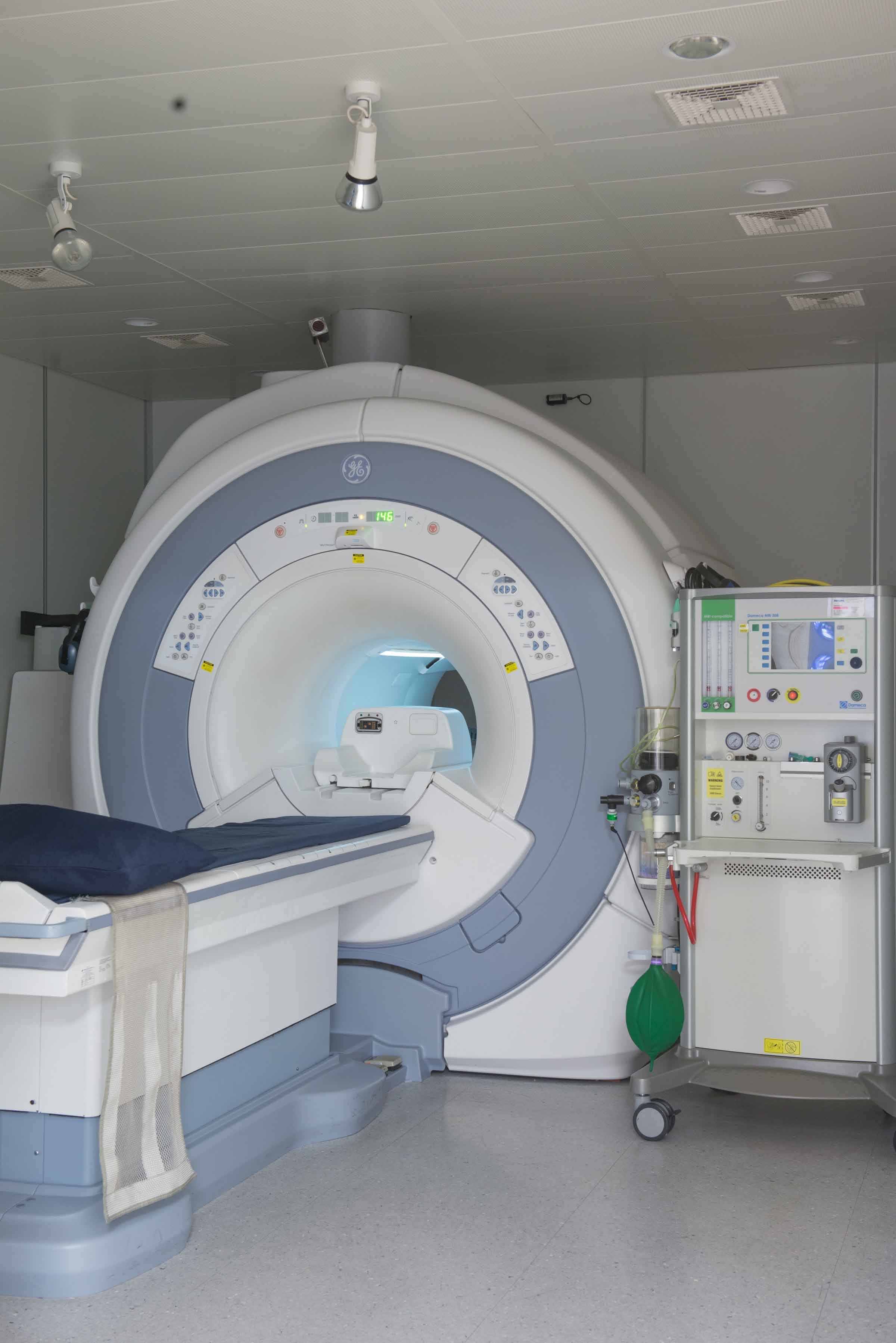
You will be asked to lie on an examination bed, which will be raised up and into the magnetic field. You will find yourself in an open-ended cylinder just over 1 meter in length. It remains open at both ends for the entire duration of your scan. The cylinder is well-lit and is ventilated by a fan.
Once in position it is most important that you remain as still as possible as movement detracts from the quality of images obtained. You will hear a variety of loud noises but we will provide you with either earphones or earplugs (depending on the type of examination) to compensate for this. Most examinations typically run for 30 minutes although some scans may last for up to an hour.
The radiographer will be in contact with you at regular intervals during the scan to ensure that you are still comfortable and to let you know how long each part of the scan will take.
For some examinations a contrast agent is required to provide a complete diagnosis. This is a substance called Gadolinium, and it is injected into a vein. It is safe and painless. The radiographer will, wherever possible, talk to you about this. Apart from intravenous contrast, certain studies also require oral contrast. The procedure for oral contrast will be explained prior to the study. There are also particular examinations that require a period of fasting for approximately 6 hours prior to the test.
Some specific examinations do require what we call breath-hold intervals. The radiographer will explain and guide you thoroughly through this.
Occasionaly, a MRI arthrogram may be necessary to visualise the joint structures. These cases require injection of contrast material and sterile saline directly into the joint before the MRI. This can be done using fluoroscopic or ultrasound guidance.
How to Prepare for the Test
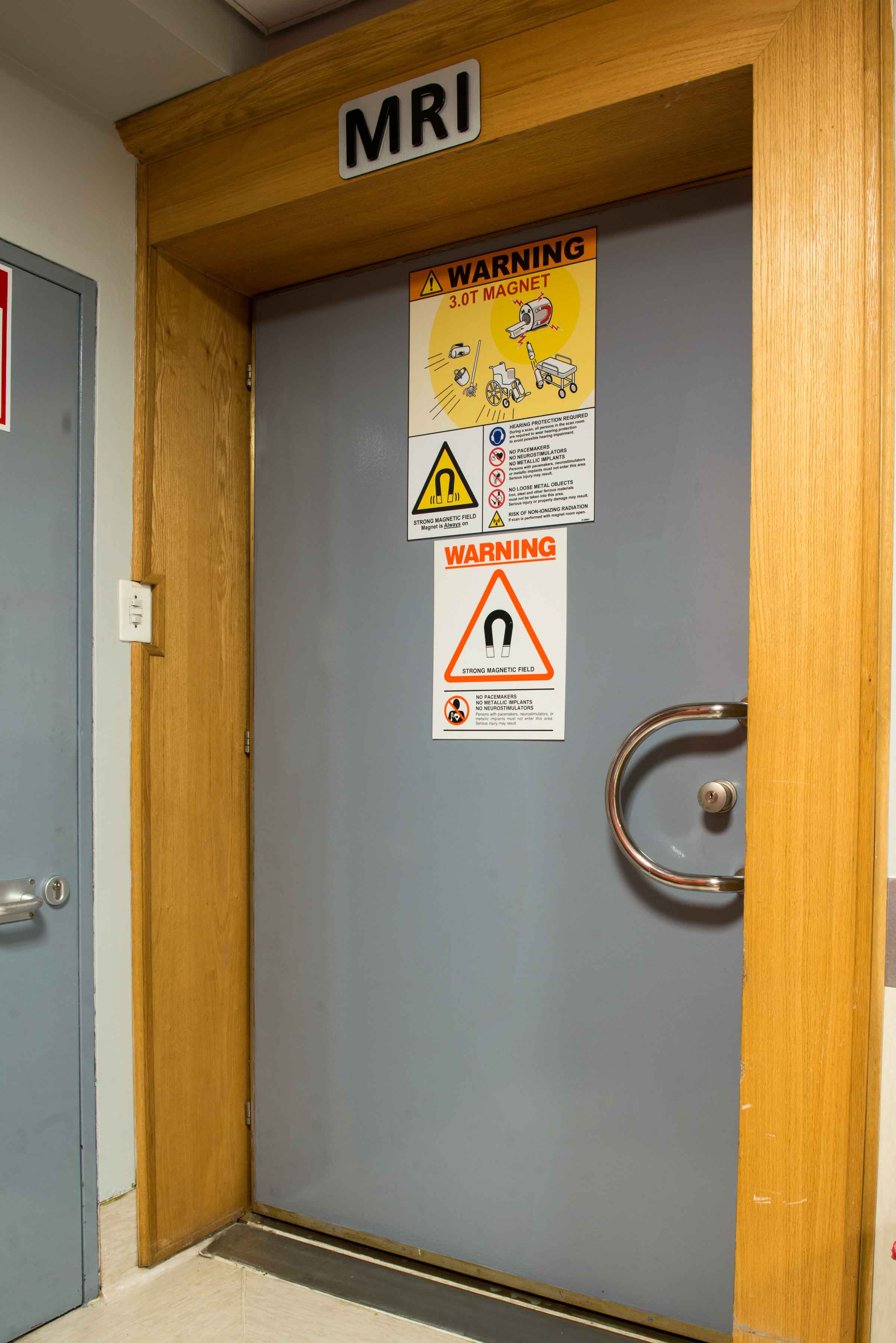
We will ask you to change into a gown that is MRI friendly. That means that there is no metal in the gown. You will also need to remove all jewellery (including wrist watches and body piercings) and any other metallic objects. It is preferable that you leave items of value at home. There is no need to stop medication for the examination. You may eat and drink normally unless instructed otherwise.
You need to complete a consent form. Your health care provider or radiographer will explain the procedure and its risks.
Before your MRI scan, tell your doctor and the MRI radiographer if you:
- Are allergic to any medicines. The contrast material used for MRI does not contain iodine. If you have a known allergy to the contrast material used for MRI, tell your doctor before having the test. Sometimes the benefits of having this test may outweigh the risks.
- Are or might be pregnant or are breastfeeding. The contrast agent is excreted into the breast milk, so breastfeeding should be discontinued for 24 hours.
- Have a pacemaker, artificial limb, any metal pins or metal parts in your body (especially in the eyes), metal heart valves, metal clips in your brain, metal implants in your ear, tattooed eyeliner, or any other implanted or prosthetic medical device (such as a medicine infusion pump).
- Have had an accident or work with metal. This increases the possibility that you have metal fragments in your head, eyes, skin, or spine. An X-ray may need to be taken first, to determine whether the MRI scan is safe.
- Had recent surgery (last 3 months) on a blood vessel. In some cases you may not be able to have the MRI test.
- Have an intrauterine device in place. Certain IUCD’S may prevent you from having the MRI test.
- Become very nervous in confined spaces. You need to lie very still inside the MRI magnet. You may need medicine to help you relax. In some cases the test can be done with open MRI equipment (not available at NRS). It is not as confining as standard MRI machines.
- Have any other health conditions, such as kidney disease that may prevent you from having an MRI using contrast material.
Contrast agents for MRI, contain Gadolinium and are an extremely safe group of drugs. Side effects rarely develop. Contra-indications would be and allergy to gadolinium or a risk of nephrogenic systemic fibrosis (NSF). Patients with poor kidney function or known kidney diseases are the people at risk for these side effects. Renal function blood tests can be done prior to the MRI scan to determine whether your kidneys are functioning adequately.

Branches
Netcare N17 Hospital
bernita@nrsmail.co.za/ 011 815 2814
Ahmed Kathrada Private Hospital
aisha@nrsmail.co.za / 011 852 8820
Netcare Waterfall City Hospital
corne@nrsmail.co.za / 010 612 6669
/ 010 612 0612 / 011 304 7751
071 246 5759
Contact Head Office
National Radiology Services Inc.
12 Stirrup Lane
Woodmead
1682
Tel: 010 612 0271 / 010 612 0612